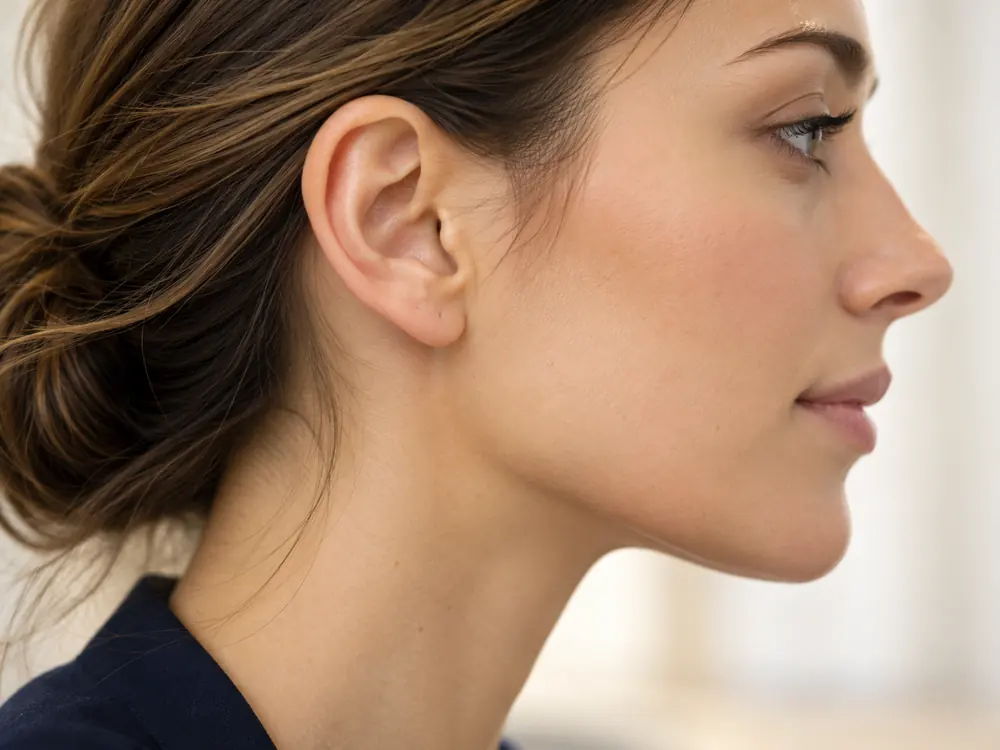
What are protruding ears?
Protruding ears (sometimes called prominent or bat ears) stand out from the head at a wider angle than usual, or lack some of the natural folds of the ear cartilage. The condition is usually present from birth and can run in families. It does not affect hearing, but it can cause self-consciousness, especially in school-age children and in some adults.
Otoplasty reshapes the ear cartilage to bring the ear closer to the head in a more natural position. It can be performed in both children and adults.
Why do people seek treatment?
The reason is usually appearance. The decision depends on how much the person, or the family, is bothered by it; it is not a medical necessity.
- Ears that clearly stick out when seen from the front
- A missing or poorly defined natural fold of the ear (the antihelix)
- A large bowl (concha) of the ear
- Noticeable asymmetry between the two ears
- A child being teased at school or feeling self-conscious
- Discomfort for adults with hairstyles, clothing or glasses
Examination and assessment
The examination looks closely at the angle between the ear and the head, how well the cartilage folds have developed, the size of the concha, the position of the earlobe and the differences between the two ears. The stiffness and flexibility of the cartilage also matter for planning. Photographs are taken.
For children, age, ear development and whether the child can cooperate with the process are taken into account. As part of the ENT examination, the ear canal and eardrum are also checked, and any other ear problem is addressed separately. General health, medication and any bleeding tendency are reviewed.
At what age can it be done?
The outer ear completes much of its growth in early childhood. For most children, surgery can therefore be considered around school age, usually from about 5 to 6 years old. The child’s own wishes and cooperation are part of the decision.
There is no upper age limit for adults; anyone in suitable general health can be assessed. Adult cartilage can be firmer, and the technique is planned accordingly.
Treatment options
In newborns the ear cartilage is very soft. In the first weeks after birth, ear moulding methods may therefore be an option for some babies after a specialist assessment. This approach only works in early infancy, and a specialist decides whether it is suitable.
In older children and adults, changing the shape of the ear for the long term requires surgery. The extent of the operation depends on the problem: for some patients creating the missing fold is enough, while others also need the concha reduced or the earlobe adjusted.
How is the operation done?
The type of anaesthesia depends on age: children usually have general anaesthesia, while adults may have local anaesthesia (with sedation if needed) or general anaesthesia. The operation usually takes about one to two hours, depending on whether one or both ears are treated; the exact time is confirmed at the consultation.
The incision is usually made on the back of the ear, close to the crease between the ear and the head, so the scar mostly stays behind the ear. The cartilage is reshaped with stitches, or by sculpting the cartilage where needed, to create the missing fold and bring the ear closer to the head. The goal is not to pin the ear flat but to achieve a natural-looking angle and fold. A bandage is applied at the end.
Most patients can go home the same day; the timing depends on age, the type of anaesthesia and general condition.
Recovery
Recovery varies from person to person. The timeline below is a general guide; the personal instructions you receive take priority.
- Day 1The ears are bandaged. Mild pain, throbbing and a feeling of tightness are expected and are usually controlled with the prescribed pain relief. Keeping the head raised helps reduce swelling.
- First few daysThe bandage usually stays on for a few days and is removed at a follow-up visit. Swelling, bruising and numbness of the ears are normal at this stage. The head should not be washed until the bandage is removed.
- Week 1After the bandage is removed, a headband may be needed for a while at night and, if advised, during the day to protect the ears. Children can usually return to school around the end of this period; the stitches are checked at follow-up.
- First weeksWearing the headband at night may be recommended for several weeks; the doctor decides how long. Care is taken not to fold the ears during sleep. Contact sports and activities with a risk of a knock to the ear are postponed for a while.
- 1–3 monthsSwelling and numbness gradually ease. The final shape of the ear usually becomes clear within a few months. Follow-up visits continue at the intervals your doctor recommends.
Risks and how they are reduced
Otoplasty is a commonly performed operation, but like any surgery it carries risks. These include a collection of blood under the bandage (haematoma), infection, a noticeable scar, asymmetry between the ears, the ears moving partly back outwards over time, stitches that can be felt or work their way through the skin, and temporary numbness. Over-correction can also produce an unnatural, pinned-back look.
To reduce risk, medicines that can increase bleeding are adjusted under medical supervision before surgery, and the operation is carried out under sterile conditions with careful handling of the tissues. Checking the bandage early allows problems such as bleeding to be spotted quickly. Increasing pain that does not settle, severe swelling on one side, fever or discharge should be reported to the doctor without delay. Following advice such as wearing the headband and protecting the ears from knocks helps reduce the chance of the ears moving back out.
Dr. Karataş’s approach
In otoplasty, Op. Dr. Hasan Karataş focuses on a natural-looking ear: not pinning the ear flat, but creating an angle and fold that suit the face. For children, the timing is planned together with the family, taking the child’s development and own wishes into account. The process, expectations and possible risks are discussed openly before any decision to operate.
Frequently asked questions
Do protruding ears affect hearing?
At what age can my child have surgery?
Will there be a scar?
Can the ears stick out again over time?
How long do I need to wear the headband?
Can adults have otoplasty?
When can I return to sport?
The information on this page is for general guidance only; an examination is required for diagnosis and treatment. Results vary from person to person.